
The wasm is a mark branded on a camel’s skin indicating its owner and his tribe. Every tribe had its wasm, and some sub-lineages a secondary mark of their own. It is a complete system of identification: visual, agreed upon, and legible across the distances between tribes — performing the function of a civil register in a mobile society where papers are of no use.
The wasm on rock
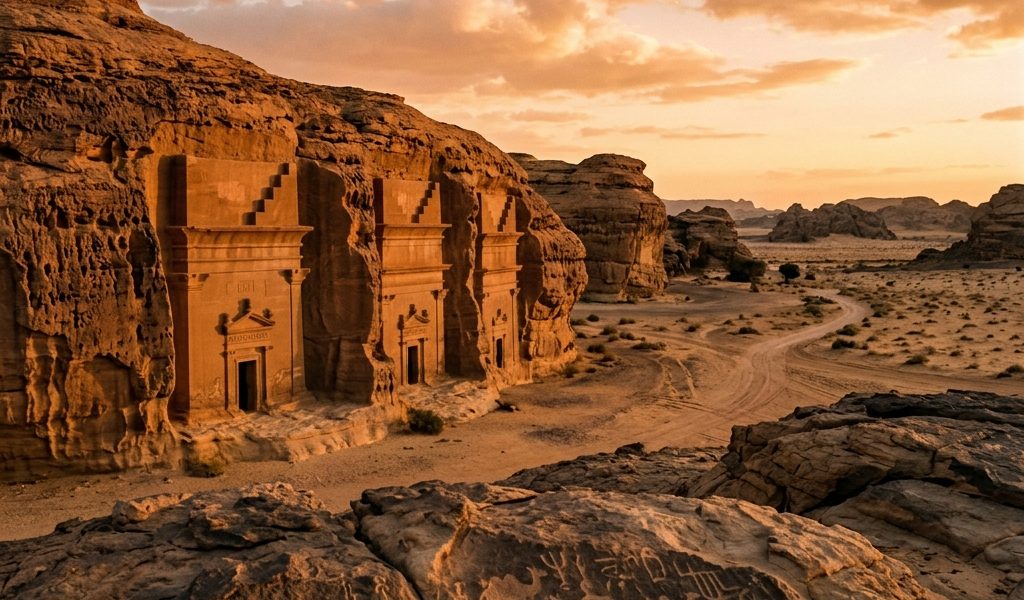
The wasm also appears carved into rock in many places across the peninsula, alongside written inscriptions. For the researcher it is evidence of movement: where a given group passed, and when.
From mark to emblem
Today the wasm appears in logos, design and jewellery. It has moved from a function of identification to a function of symbolic identity — a transition familiar to every sign that loses its use and keeps its meaning.
Republishing Anthro
Our work is free to republish under a Attribution — NoDerivatives licence. You may run it on your site or in print under the following terms:
- Publish the text as is, without altering its meaning or removing context.
- Credit the piece to its author and to Anthro, with a working link to the original.
- Images and illustrations are not included — each is separately licensed and must be cleared with its owner.
- Do not republish behind a paywall.
One comment