Popular souqs: who buys and who comes to look?
The old markets are still standing, but their customers have changed. What does it mean for a souq to become a destination?
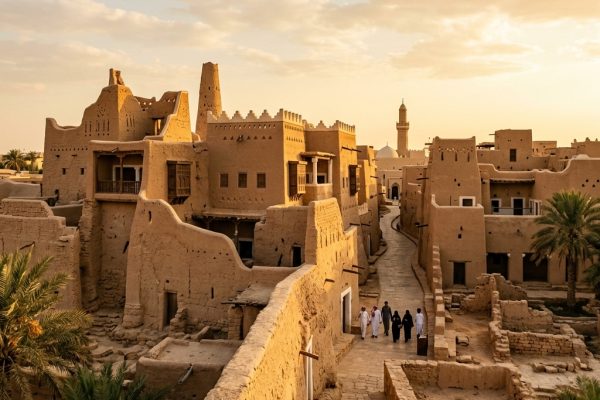
Place and architecture read as mirrors of society — from mud-brick houses to glass towers.
The old markets are still standing, but their customers have changed. What does it mean for a souq to become a destination?
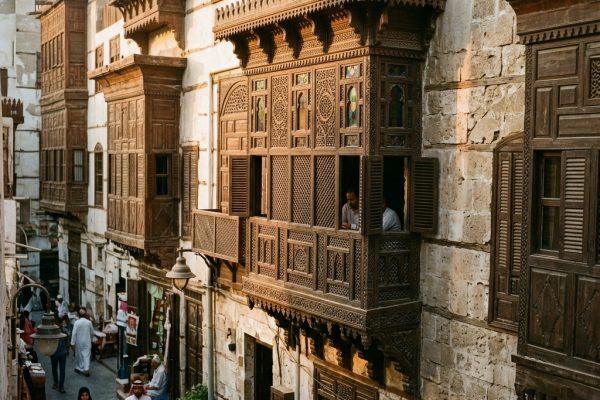
A field study of the Hijazi rawshan and its relationship to social structure and climatic adaptation in historic Jeddah.
The rawshan is more than a decorative architectural element. It is a complete social system that governs the relation of inside to outside, and private to public, in the traditional Hijazi environment.
A short documentary recording the stages of building a mud wall the traditional way, from mixing the clay to roofing.
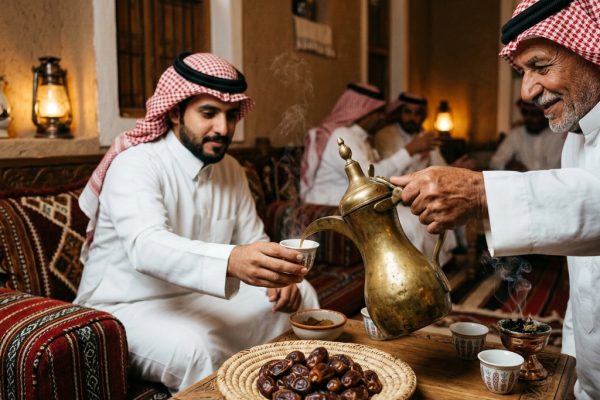
Who sits at the head? And who by the door? Seating in the majlis is a map of relations drawn on the floor.
Mud architecture in Najd is not primitive. It is a sophisticated environmental engineering system that answers climate, society and economy with an efficiency modernity has yet to match.
How did people divide scarce water fairly for centuries, with no central authority to impose the share?
Subscribe to the Anthro weekly: one article, one story, one anthropological question each week.