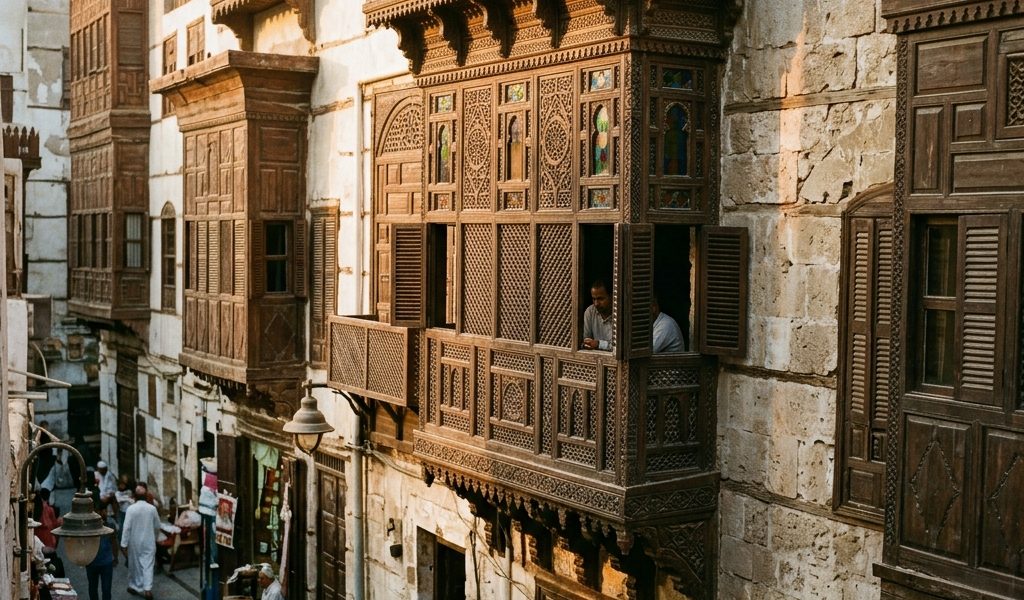

Every Saudi city has an old souq still in business: Souq Al-Zal in Riyadh, the markets of Al-Balad in Jeddah, Al-Qaysariyah in Al-Ahsa. With the arrival of the malls the role of these markets changed: they are no longer where everything is bought, but places you go to for one particular thing — or to look.
The souq as theatre
When a souq becomes a destination, the seller’s own performance changes: he explains more, allows photographs, and presents the object as a story rather than a commodity. That is a shift worth documenting rather than lamenting.
Who stays?
What remains in the old souq are the customers who do not go to malls: the elderly, the craftspeople who buy their materials there, and whoever is looking for something not sold anywhere else. They are the ones who keep the souq a souq.
Republishing Anthro
Our work is free to republish under a Attribution — NoDerivatives licence. You may run it on your site or in print under the following terms:
- Publish the text as is, without altering its meaning or removing context.
- Credit the piece to its author and to Anthro, with a working link to the original.
- Images and illustrations are not included — each is separately licensed and must be cleared with its owner.
- Do not republish behind a paywall.