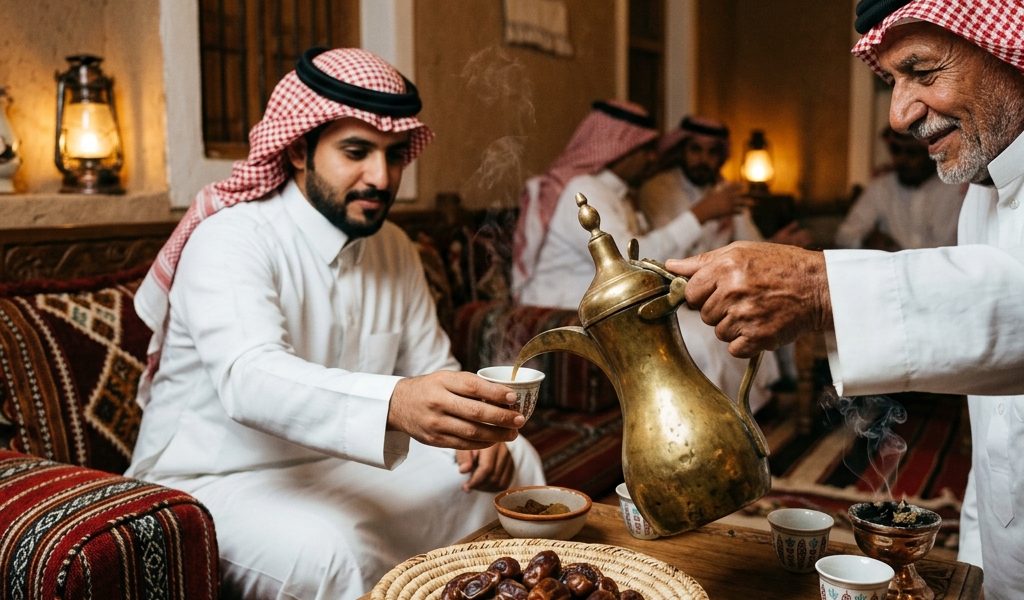

When you say your full name you are drawing a map, not merely identifying yourself.
The name in the Arabic context is a chain: your name, then your father, then your grandfather, then the family or tribal name. Each link adds a position within the kinship network.
The kunya and the shift
The kunya — Abu So-and-so — marks a shift in standing: a person moves from being a son to being a father, and the form of address changes accordingly. Language, in other words, records a social transition.
What has changed?
In official transactions and on digital platforms the name is compressed into two or three fields. That compression is not merely procedural — it conceals information that used to be read instantly in the older context.
Republishing Anthro
Our work is free to republish under a Attribution — NoDerivatives licence. You may run it on your site or in print under the following terms:
- Publish the text as is, without altering its meaning or removing context.
- Credit the piece to its author and to Anthro, with a working link to the original.
- Images and illustrations are not included — each is separately licensed and must be cleared with its owner.
- Do not republish behind a paywall.