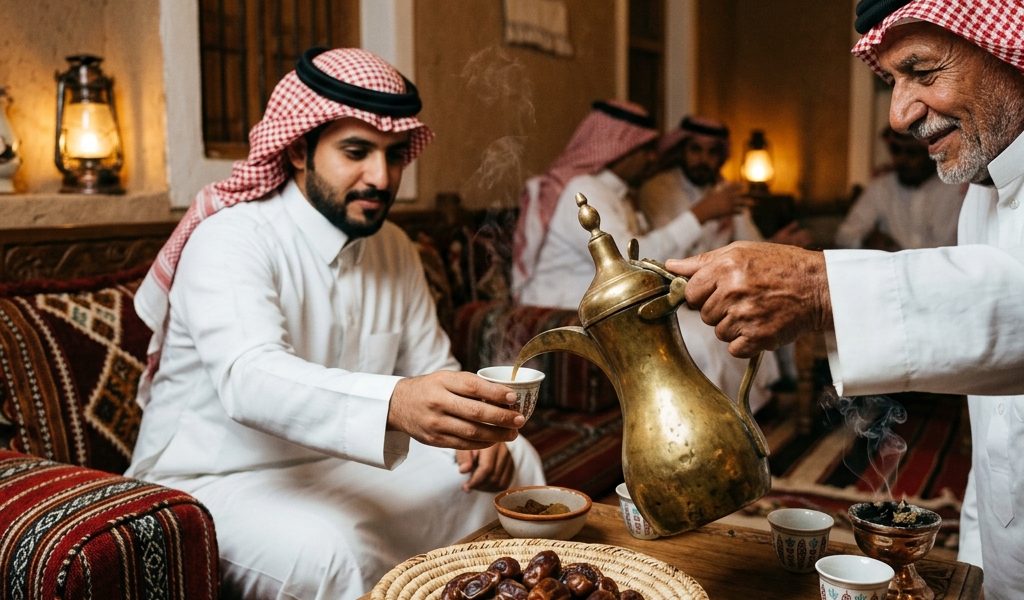

Generosity in the desert is not a luxury — it is a social insurance policy written in the language of the slaughtered beast and the guest’s portion.
When a tribesman slaughters the best camel he owns to receive a guest merely passing through, that is not extravagance — it is investment. Investment in the social capital that will return to him as reputation, allies and honour within the tribal order.
Generosity as political economy
In The Gift, the anthropologist Marcel Mauss argued that giving is never purely voluntary; it is a threefold system of giving, receiving and reciprocating. In the Saudi tribal structure that system operates with great precision.
The generous man does not give out of abstract piety alone. He gives because giving produces standing, standing produces alliances, and alliances produce survival and prosperity in a harsh desert environment.
Republishing Anthro
Our work is free to republish under a Attribution — NoDerivatives licence. You may run it on your site or in print under the following terms:
- Publish the text as is, without altering its meaning or removing context.
- Credit the piece to its author and to Anthro, with a working link to the original.
- Images and illustrations are not included — each is separately licensed and must be cleared with its owner.
- Do not republish behind a paywall.