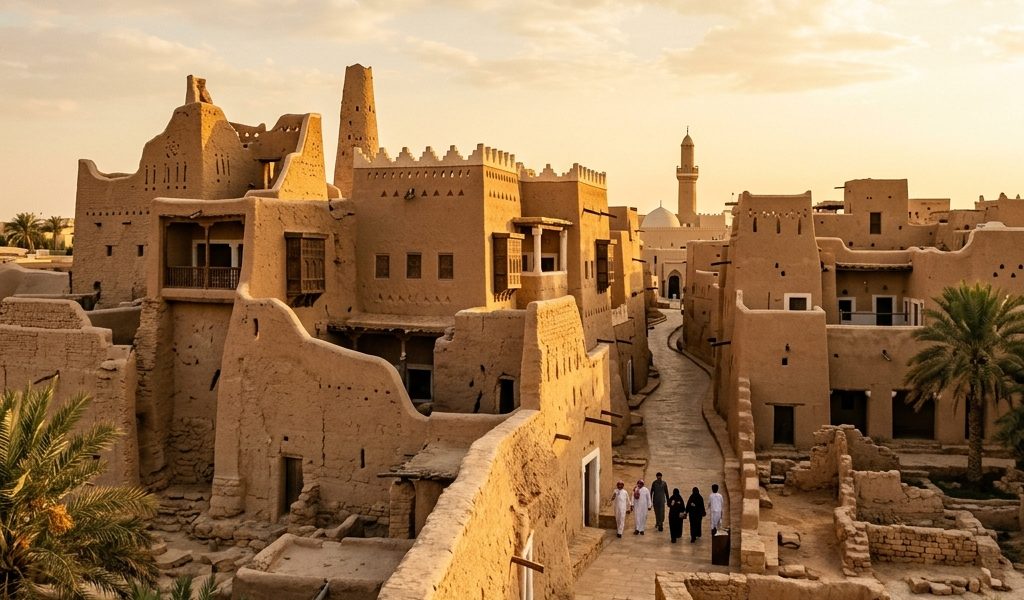

The souq is not a place — it is an event that repeats daily. An event that redraws the map of the city in people.
In Jeddah’s Souq Al-Alawi the smells of cardamom, incense and new leather mix with the sounds of bargaining, greeting and laughter, forming a sensory environment no air-conditioned, neon-lit mall can reproduce.
In urban anthropology the old souq counts as an urban intersection — a meeting of craft, trade, sociability and administration. Every souq organises the city around itself, and everything in the city eventually finds its way there.
The map of the souq as the map of society
In traditional Saudi markets the arrangement of shops mirrors the social order precisely. Crafts and trades cluster: goldsmiths in one alley, weavers in another, spices in a third. That clustering is not accidental. It is professional, social and defensive organisation all at once.
Republishing Anthro
Our work is free to republish under a Attribution — NoDerivatives licence. You may run it on your site or in print under the following terms:
- Publish the text as is, without altering its meaning or removing context.
- Credit the piece to its author and to Anthro, with a working link to the original.
- Images and illustrations are not included — each is separately licensed and must be cleared with its owner.
- Do not republish behind a paywall.