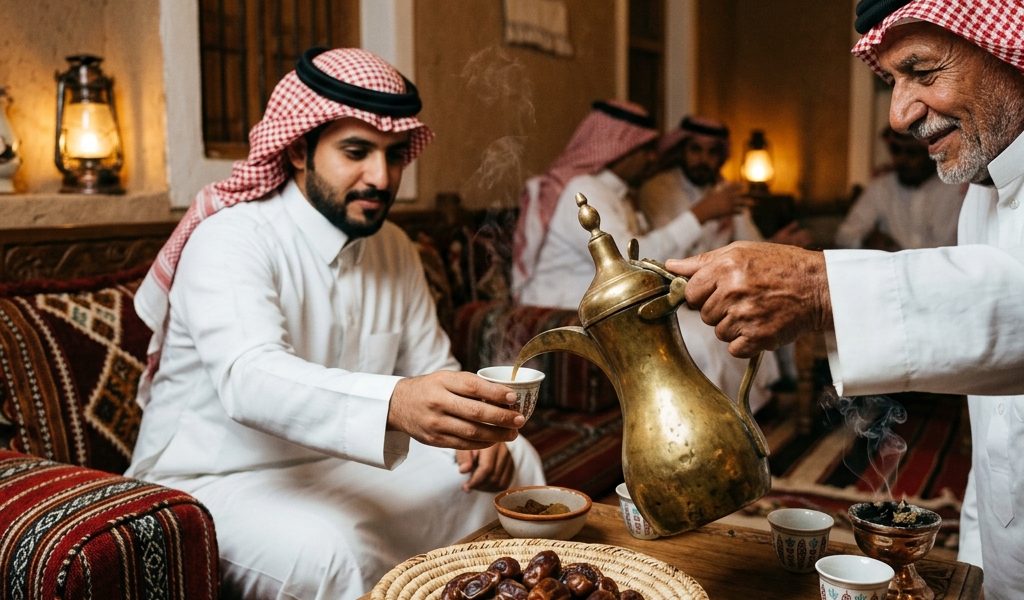

We wear our clothes the way we write our lives — with a deliberate choice of what we mean to say, and an equally deliberate choice of what we mean to withhold.
The bright white thobe, the falling ghutrah, the igal tilted at a particular angle — these are not simply garments. They are visible messages carrying precise social codes that only those living inside the system can read.
The daily performance of identity
In The Presentation of Self in Everyday Life, the sociologist Erving Goffman argued that daily life is a continuous theatre. Dress, in that frame, is a central part of the set and costume that define the role and set the relations.
In the Saudi context traditional dress adds a national dimension in formal settings — the white thobe becomes, in effect, a national suit — while in tribal settings it carries fine details pointing to regional and family belonging.
Republishing Anthro
Our work is free to republish under a Attribution — NoDerivatives licence. You may run it on your site or in print under the following terms:
- Publish the text as is, without altering its meaning or removing context.
- Credit the piece to its author and to Anthro, with a working link to the original.
- Images and illustrations are not included — each is separately licensed and must be cleared with its owner.
- Do not republish behind a paywall.