Why does what we eat matter to the anthropologist?
A translation of an introductory piece on the anthropology of food, and why the table makes a good entry point for studying a society.

A translation of an introductory piece on the anthropology of food, and why the table makes a good entry point for studying a society.
A line, two lines, and a circle. He did not write his name,
The trunk is a roof, the frond is rope and baskets, and the date is food, dowry and provision. The palm is not one tree.
They did not plant you for shade, they planted you so the ground would stay occupied.
The mortar, the quern and the roasting pan — tools read as documents about work, time and the division of roles.
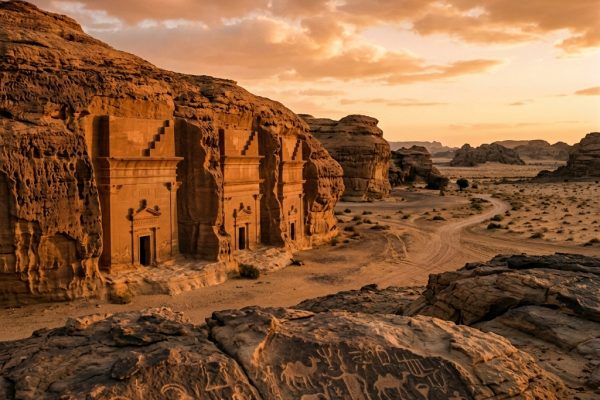
The rocks of AlUla hold a history alive with feeling, names and fear — human texts that outlast time and tell what the official archive left out.
Ornament in sadu is not decoration. It is a system of signs that people of the badia read the way writing is read.
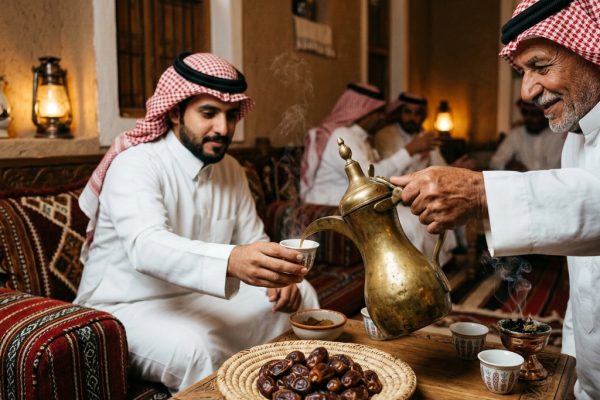
The thobe and the ghutrah are not merely clothing. They are a daily performance of identity that declares belonging and negotiates presence in Saudi social space.
Subscribe to the Anthro weekly: one article, one story, one anthropological question each week.