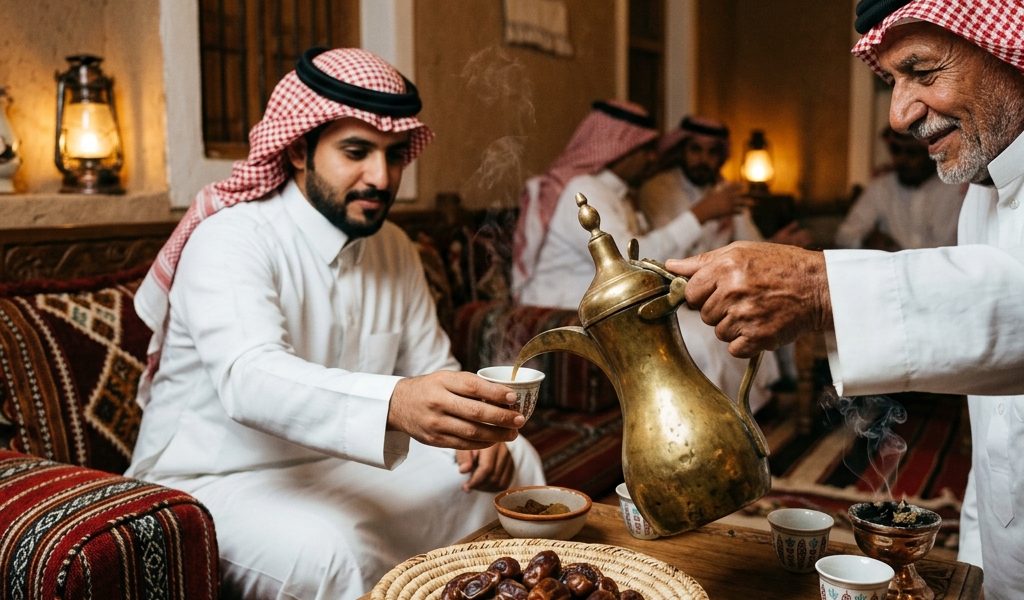

Over the past decade the café has become the preferred meeting place in Saudi cities: for work, for meetings, for late evenings. The anthropological question here is not “why did cafés spread?” — the economic answer is well known — but: did people carry their old rules into the new place?
What moved and what did not
Hospitality moved: whoever invites, pays. The ordering of standing moved too, in the choice of table and seat. What did not move is the strict separation in seating, nor the sequence of serving.
A third place
Sociologists call places of this kind the third place — neither home nor work. What distinguishes the Saudi case is that this third place was born into a society that already had an institution resembling it: the majlis. Comparing the two reveals more than studying the café alone.
Republishing Anthro
Our work is free to republish under a Attribution — NoDerivatives licence. You may run it on your site or in print under the following terms:
- Publish the text as is, without altering its meaning or removing context.
- Credit the piece to its author and to Anthro, with a working link to the original.
- Images and illustrations are not included — each is separately licensed and must be cleared with its owner.
- Do not republish behind a paywall.