The ardah: the body when it becomes a collective
Two rows, a drum and a poet. What happens socially when a hundred men move to a single rhythm?
Everything published in Anthro, ordered and filterable by category, format, series and topic.
Two rows, a drum and a poet. What happens socially when a hundred men move to a single rhythm?
A short answer for anyone approaching the field for the first time: what does an anthropologist study, and how?
The sellers fold away their voices as the mats are folded.
Before you start the recorder: what to ask, how to listen, and what to write down after you switch it off.
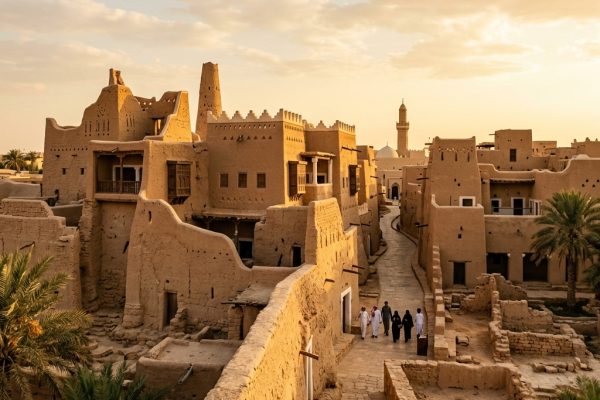
Mud architecture in Najd is not primitive. It is a sophisticated environmental engineering system that answers climate, society and economy with an efficiency modernity has yet to match.
How did people divide scarce water fairly for centuries, with no central authority to impose the share?
A name does not designate an individual so much as a position in a network. A reading of the structure of the Saudi name.
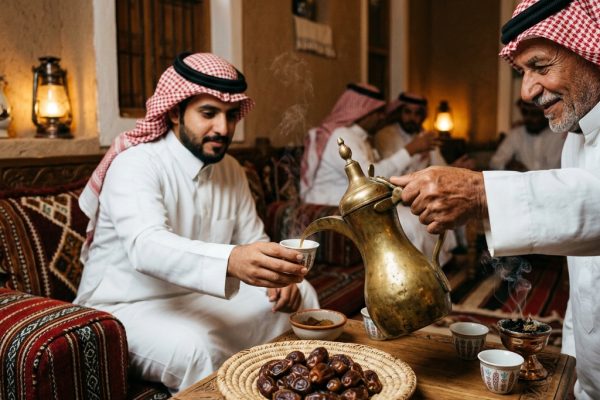
Generosity in Saudi tribal culture is not merely an individual virtue. It is a complete socio-economic system that redistributes resources and produces standing and belonging.
Ornament in sadu is not decoration. It is a system of signs that people of the badia read the way writing is read.
They say: this is an old wall. And I say: this is a breath that stopped.
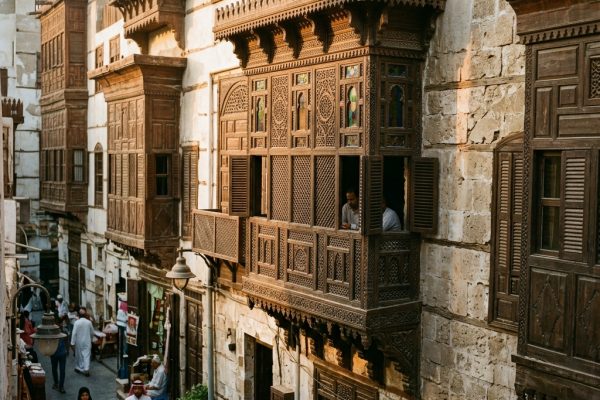
The old souq in the Arab city is not only a place of buying and selling. It is a social theatre, a civilisational archive, and a map of identity drawn in people, smells and sounds.
Before oil, pearls were the entire economy of the eastern coast. What remains of a trade that ended within a single generation?
Subscribe to the Anthro weekly: one article, one story, one anthropological question each week.